


Ripening chambers
Controlled ripening & consistent quality
Optional Grid resilient Thermal storage & Solar Integration
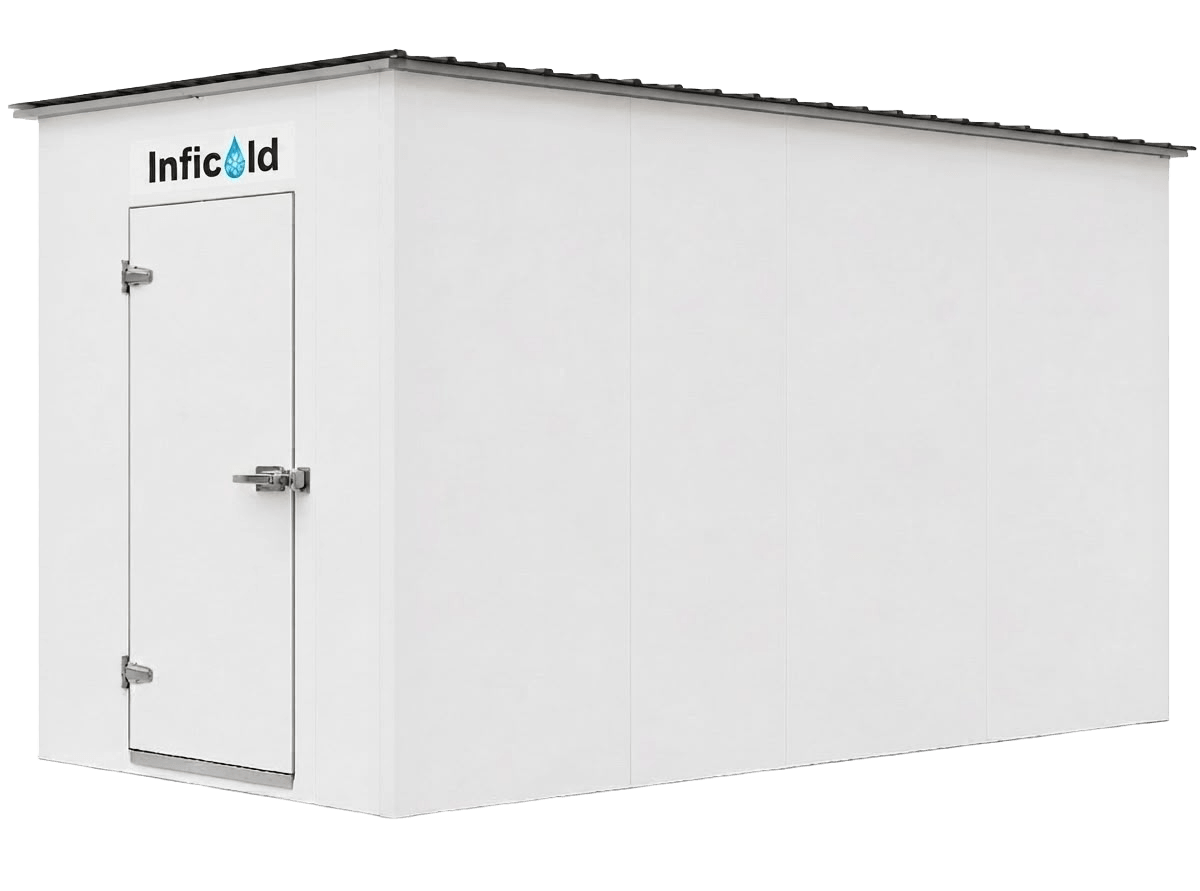
Salient features
Precise Temperature & Humidity Control
Ensures uniform and consistent ripening
Controlled Ethylene Application
Precise ethylene dosing for uniform ripening
Advanced ventilation system
Uniform ethylene, temperature & humidity distribution with CO₂ removal
Energy-Efficient Design
Energy-efficient PUF insulation and refrigeration reduce power consumption
Ripening chambers are controlled cold-chain environments designed to accelerate and standardize the ripening of fruits such as bananas, mangoes, papayas, avocados, kiwis, pears, persimmons, figs, passion fruits, apricots, plums, and tomatoes. By precisely controlling temperature, relative humidity, ethylene concentration, and air circulation, these chambers promote uniform ripening and help achieve the desired flavour, colour, texture, and quality. Controlled ripening also minimizes external influences, reduces post-harvest losses, and enables fruits to be ripened according to specific protocols and dispatched to the market at the desired stage of maturity.
Fruit ripening is a natural physiological process primarily regulated by ethylene, particularly in climacteric fruits. Under controlled temperature and relative humidity conditions, fruits undergo several biochemical changes, including the conversion of starch into sugars, reduction in acidity, softening of the pulp, breakdown of chlorophyll, development of characteristic colour, and formation of flavour and aroma. Ripening chambers provide the controlled environment required to regulate these changes and achieve consistent, high-quality ripening across the entire batch.
Proper pre- and post-harvest handling is essential for achieving uniform ripening. After harvesting, de-sapping removes latex that may cause skin burns and black spots, while washing helps remove dirt, sap residues, and surface microorganisms. The fruits are then graded according to size, maturity, and quality to promote uniform ripening, colour development, appearance, and marketability. Damaged, diseased, defective, or immature fruits are removed. The graded fruits are packed in well-ventilated crates or corrugated fibreboard boxes and transferred to the ripening chamber or cold storage, depending on the required handling and ripening schedule.
After grading and packing, the fruits are placed in the ripening chamber, where ethylene is applied at a controlled concentration for a predefined period. Temperature and relative humidity are maintained according to the specific requirements of the commodity. Proper air circulation ensures uniform distribution of ethylene and temperature throughout the chamber, while controlled ventilation periodically removes carbon dioxide generated during respiration and helps prevent off-flavour development. These controlled conditions promote uniform ripening, attractive colour development, improved texture, and consistent quality throughout the batch.
Following is broad guide for fruit ripening condition
| S. No. | Product Details | Ethylene Concentration, ppm | Ethylene Exposure Time, hrs | Ripening Temperature, °C | Storage Temperature After Ripening, °C |
|---|---|---|---|---|---|
| 1 | Banana | 100 – 150 | 24 – 48 | 15 – 18 | 13 – 14 |
| 2 | Mango | 100 | 24 | 20 – 22 | 10 – 13 |
| 3 | Papaya | 100 | 24 – 48 | 20 – 25 | 7 |
| 4 | Pears | 100 – 150 | 24 – 72 | 18 – 22 | 0 |
| 5 | Tomato | 100 – 150 | 24 – 48 | 18 – 20 | 12.5 |
Source: Adel A. Kader, Department of Plant Sciences, University of California, Davis, CA.
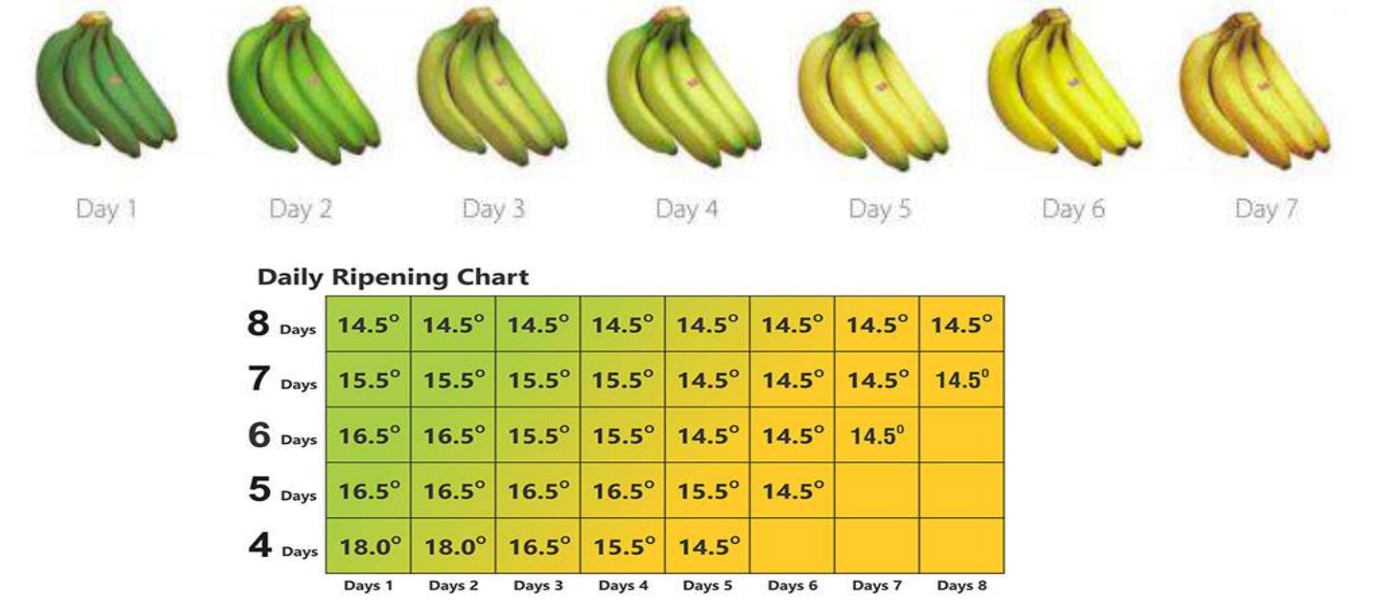
Following ethylene exposure, the fruits are allowed to complete the ripening process gradually and uniformly. Once they reach the desired stage of maturity, they can be dispatched directly to the market or, where required, transferred to a suitable cold room for short-term storage. Lower storage temperatures help slow further deterioration and maintain fruit quality until transportation and marketing.
Inficold designs and manufactures state-of-the-art ripening chambers engineered for efficient, uniform, and controlled ripening of fruits and vegetables. Key features include:
- Reliable, Energy-Efficient Refrigeration: Ensures precise temperature control for optimal ripening conditions.
- High-Efficiency PUF Insulated Panels: Minimize heat gain and maintain stable chamber temperatures.
- Airtight Doors: Prevent air leakage and maintain controlled chamber conditions.
- Timer-Based Ventilation & Exhaust Systems: Enable controlled air exchange for effective ripening.
- High-CFM Evaporators: Provide uniform airflow and consistent temperature throughout the chamber.
- Ethylene Generators: Enable controlled and sequential fruit ripening.
- Multi-Chamber Operation: Operate multiple chambers using a single ethylene generator.
- Independent Chamber Settings: Allow different fruits and ripening conditions to be managed independently.
- Intelligent Controls: Provide precise monitoring and management of ethylene levels.
- Portable Ethylene Systems: Offer flexible operation and easy deployment across chambers.
- Humidifiers: Maintain optimum relative humidity for better fruit quality and ripening.
- Optional Solar & Thermal Energy Storage Integration: Supports grid-resilient and energy-efficient chamber operation.
Contact Us
Address : Khasra No. 1202/2 & 1202/4, Village Khera Dehat, Pilkhuwa, Hapur-245304, Uttar Pradesh, India
CIN: U74120UP2015PTC072958
 Email:
  Sales and Service: